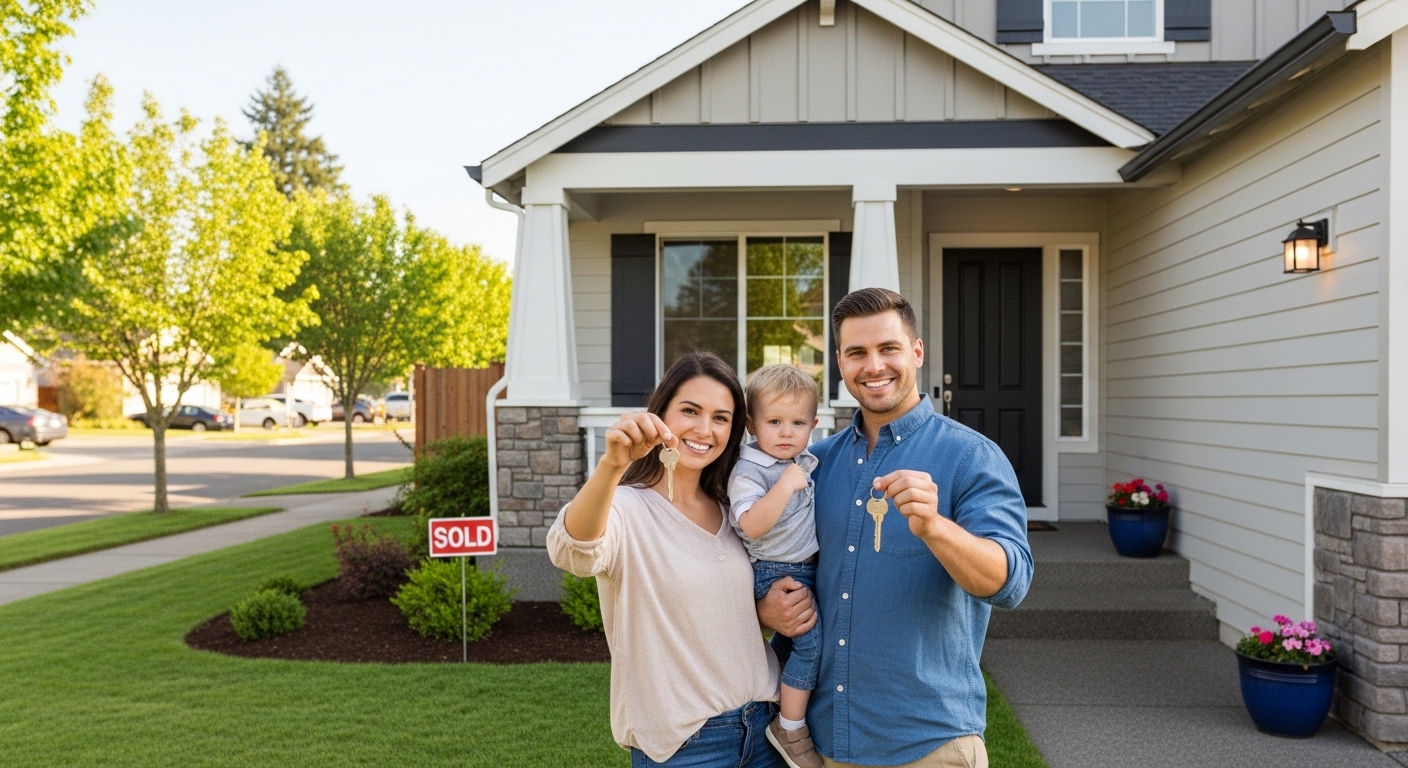
Every few months, someone asks me the question that no real estate agent can answer with a simple yes or no: "Should I buy a house or keep renting?" The truth is, it's one of the most consequential financial decisions you'll make in your lifetime. It shapes not just your monthly budget, but your long-term wealth, your lifestyle choices, and your sense of stability for years to come.
In 2026, this decision feels more nuanced than ever. The housing market landscape has shifted dramatically from the frenzy of a few years ago. Mortgage rates are stabilizing, inventory is improving in many areas, and prices have moderated from their peaks. Meanwhile, rents continue to climb in many regions, forcing people to reconsider what they thought was the "safe" option.
As a real estate agent here in Newberg, I've had countless conversations about this exact dilemma. Let me walk you through what I'm seeing, the real pros and cons of each path, and why the math might surprise you more than you expect.
The Case for Renting
Let's start with the advantages of renting because they're real, and they matter for the right situations.
Renting offers flexibility that homeownership simply can't match. If your job might relocate in two years, if you're not sure where you want to settle long-term, or if you're still figuring out what kind of neighborhood feels right for you, renting lets you test the waters without massive financial commitment. There's no six-month ordeal of buying and selling. You can move when your lease ends.
Month-to-month costs also look attractive when you only compare mortgage payments to rent. In many markets right now, renting a starter home was less expensive than buying one in every single one of the 50 largest metropolitan areas. If your focus is purely on what leaves your bank account each month, renting often wins. This freed-up cash can go toward investments, emergency savings, or other financial goals if you have the discipline to use it that way.
There's also predictability in the short term. Your rent might increase yearly, but you know exactly what you owe each month. You don't wake up to a surprise $5,000 roof repair bill. The landlord handles maintenance, and that's their responsibility and their expense.
The Case Against Renting
But here's where the renting narrative starts to fall apart for most people: it's temporary spending with no return on investment.
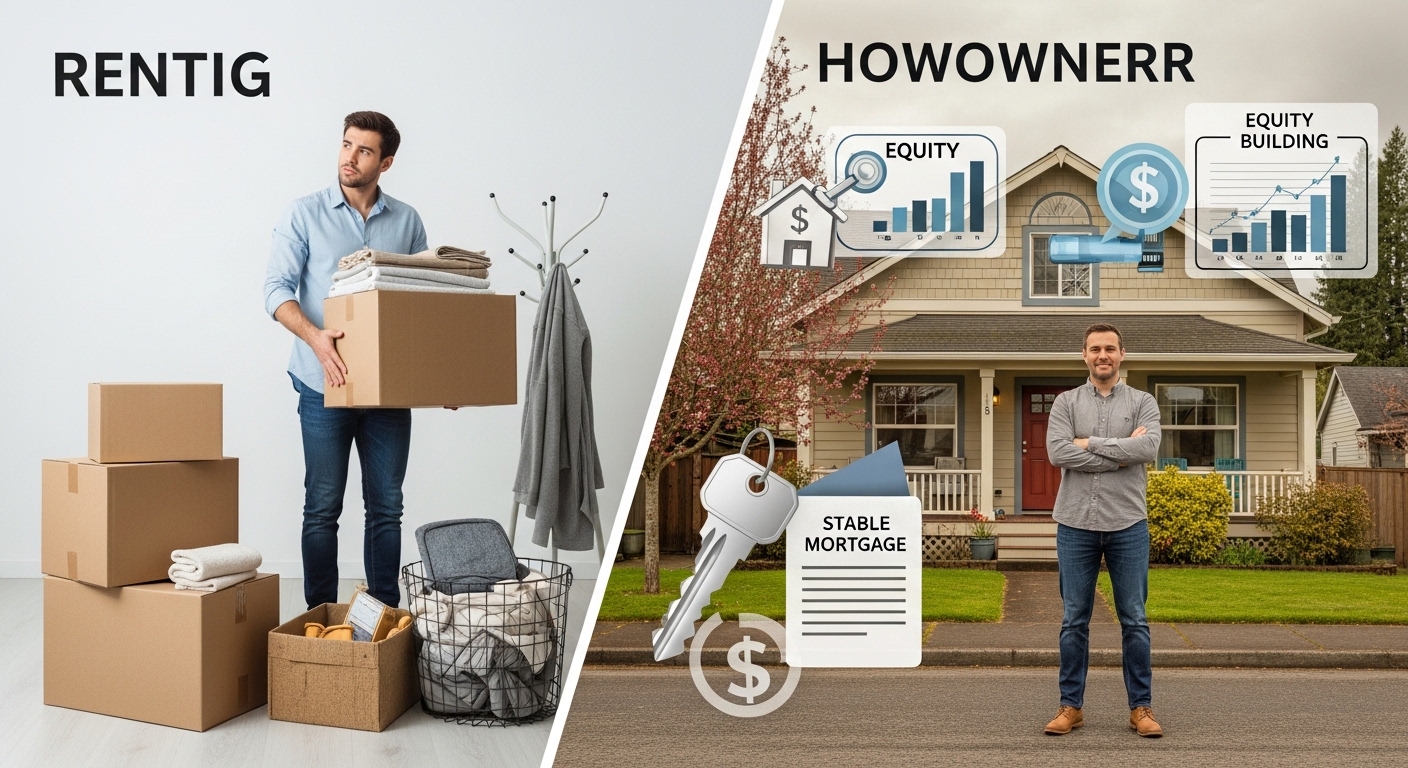
That rent payment disappears. Every single month. You build no equity, you own no asset, and you gain no financial stake in a property. When you rent, you exchange money for housing — and that's it. You build no equity and receive no appreciation. Spend $20,000 per year on rent for a decade, and you've paid $200,000 that generates zero ownership and zero wealth.
Additionally, rent increases remain a reality, though the pace of growth has slowed compared with previous years. In some regions, rents rose modestly (around 2–3%), while others experienced stronger rent inflation. These higher rental costs place pressure on household budgets — especially for younger renters and those saving for a home down payment. Unlike a fixed-rate mortgage that locks in your payment, rent creeps upward year after year. What seemed affordable five years ago might strain your budget today.
You also have minimal control over your living situation. Want to paint the walls? Paint the landlord's property. Want to renovate the kitchen or build a deck? Not your call. You're inhabiting someone else's asset under someone else's rules.
The Case for Buying
Now let's talk about homeownership, because the financial case has actually gotten more compelling in 2026.
The foundation of homeownership is equity building. Each payment you make toward your mortgage kicks off two major benefits: you increase your equity, and you reduce your loan. That's wealth building in action—month after month, you own more of your home and owe less to the bank. This is forced savings in its purest form. You don't have to be disciplined about investing the difference between rent and a mortgage payment—the equity builds whether you try or not.
Over time, this compounds into real wealth. With each mortgage payment, a portion of the principal reduces your loan balance and increases your ownership stake. Additionally, if home values appreciate over time, that equity growth can significantly compound wealth — especially over long holding periods. Think about it this way: Renting may cost thousands over several years with no asset accumulation. Buying for a similar cost, over five years, can build tens of thousands in equity through both principal paydown and price appreciation.
Then there's stability. A fixed-rate mortgage keeps your monthly costs steady, unlike rent, which can jump every year. This matters more than people realize. As inflation rises and wages don't keep pace, you're grateful that your housing payment stayed the same while everything else got more expensive.
Homeownership also opens doors to tax benefits that renting can't offer. If you itemize deductions, the IRS mortgage interest deduction lets you subtract interest paid on your mortgage (within limits) from your taxable income. Property tax deductions and sometimes capital gains exemptions (if you meet the criteria for selling your primary residence) can sweeten the deal further. Additionally, starting with tax year 2026, homeowners are able to deduct private mortgage insurance premiums (PMI) as part of the mortgage interest deduction.
And then there's control. You can paint, renovate, customize, and build the home you actually want to live in. That matters for your daily happiness, and it matters for your home's long-term value.
The Case Against Buying (The Real Concerns)
I'd be dishonest if I didn't acknowledge that buying isn't automatic either.
Upfront costs are substantial. Down payments, closing costs, inspections, and appraisals add up quickly. Buying and selling within 2–3 years almost never pencils out after you factor in closing costs (2–5% to buy, 5–8% to sell). If you might move soon, the transaction costs alone can wipe out any equity gains.
Additionally, the true cost of homeownership includes taxes, insurance, and maintenance — not just the monthly mortgage payment. A big roof repair, a foundation issue, or HVAC replacement can cost thousands. You're responsible for all of it. Renters don't have that burden.
Monthly costs can also look higher in the short term. Renting looks cheaper month-to-month in most markets today. Buying looks better over 7–10+ years when equity and appreciation are factored in. This is an important reality check: if your budget is tight, buying might actually stretch you too far right now.
The Break-Even Point: How Long Do You Need to Stay?
This is where the conversation gets practical. At 2026 mortgage rates hovering in the low-to-mid 6% range, the break-even point for buying vs. renting typically falls between five and seven years in most U.S. markets. That's the point where the equity you've built, combined with protection from rent increases, outweighs the higher upfront costs and monthly overhead of owning.
In simpler terms: If you plan to stay in a home for five or more years, buying generally wins in 90% of U.S. markets, according to mortgage analysis from Compass Mortgage. If you expect to move sooner, renting is usually the smarter short-term financial decision.
This number is critical. Ask yourself honestly: where will you be in five years? Are you likely to be in Newberg or the surrounding Oregon communities? Do you plan to stay longer? If the answer is yes to both questions, the financial case for buying becomes very strong.
What's Happening in Oregon and Newberg Right Now
If you're considering buying in Oregon, the timing is actually favorable. The Oregon housing market in 2026 is in transition. After years of rapid growth, higher interest rates and rising inventory levels have slowed the pace, but demand remains strong in lifestyle-driven markets.
For those of us here in Newberg, this is meaningful. The Oregon housing market in 2026 has settled into a more balanced environment after years of a frenzied seller's market. Prices are stabilizing, inventory is rising, and buyers are gaining leverage. This isn't the pressure-cooker market of 2021. You have time to find the right home, negotiate, and breathe.
The balanced market — neither the frenzied seller's market of 2021 nor a buyer's market — means homes that are well-priced, well-presented, and marketed effectively continue to sell on favorable terms. Newberg remains an attractive area, particularly for people who value community, reasonable access to Portland, and a more connected quality of life.
Moreover, mortgage rates have stabilized and slightly declined. After peaking above 7% in recent years, mortgage rates have moved closer to the 6% range. That's a meaningful change from even a year ago.
The Real Question You Need to Answer
Here's what I tell people when we sit down to talk about this decision: the math matters, but it's not the whole story.
Run the numbers. For renters who feel stuck in the "someday" phase of homeownership, the smartest first step is simply reviewing the numbers. A quick affordability analysis can often reveal opportunities that are not obvious at first glance. Compare what your actual monthly payment would be to what you're paying in rent. Factor in taxes, insurance, maintenance reserves, and HOA fees if applicable. Be honest about what you can afford.
Then ask yourself the timeline question: Will you stay in a home for at least five years? If not, renting is probably smarter. If yes, homeownership likely wins, especially when you factor in future rent increases that won't apply to your fixed mortgage payment.
Finally, consider what home ownership means to you beyond the dollars. The ability to build something, to have stability, to invest in a community, to have something to pass down—these things have value too.
Where I Come In
As your local real estate agent in Newberg, my job isn't to push you toward buying. It's to help you make the right decision for your specific situation. If renting makes sense for your life right now, that's a perfectly valid choice. But if you've been telling yourself "maybe someday," I'd encourage you to dig into the actual numbers.
I work with buyers at all stages—first-time buyers, empty nesters, investors, people relocating to the area, and families growing into new homes. I know the Newberg market intimately, and I can show you exactly what homes cost to own in our area, what inventory looks like, and what kind of appreciation you might expect.
If you're ready to explore whether buying makes sense for your situation, I'm here to walk through it with you, without pressure and with full transparency. You can find current listings and market data on HOUSEJET, and you can reach out to me directly at my website if you want to talk through your specific situation.
The rent versus buy decision is deeply personal. But in 2026, with mortgage rates stabilizing and the Oregon market finding its footing, it might be worth reconsidering what seemed impossible a couple of years ago.